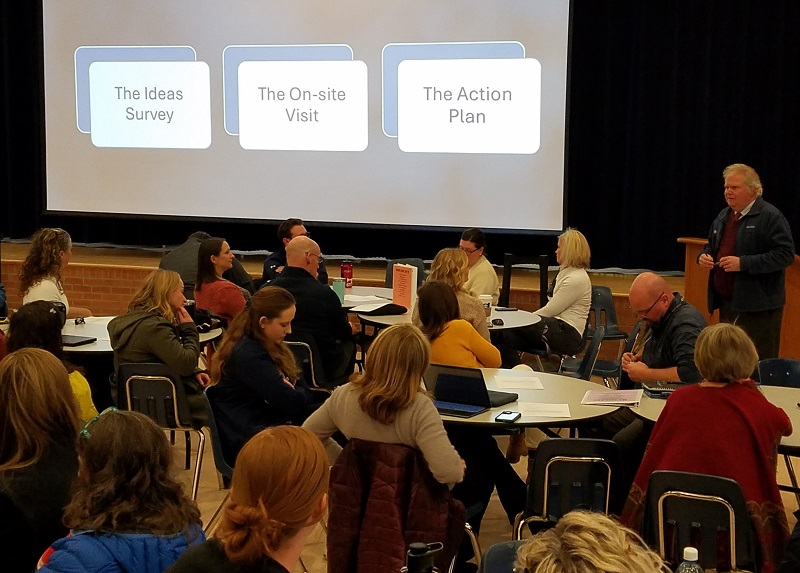
Charlie Legendre preps the Mullen High School faculty for its upcoming LCAP visit.
The San Francisco New Orleans District’s (SFNO) Lasallian Catholic Assessment Process (LCAP) begins its 22nd year as Mission effectiveness evaluation instrument for the District’s schools with visits to three schools in 2024-25: La Salle Catholic College Preparatory in Milwaukie, OR, Mullen High School in Denver, CO, and Christian Brothers High School in Sacramento, CA.
As these three visits take place, both the schools and the District will be continuing a program that has found great success in its reflective and collegial approach to institutional assessment done as Lasallian community formation.
First launched by the former District of San Francisco in 2002 as the Catholic Lasallian Assessment Process (CLASP), LCAP was born out of a desire to objectively determine if a school was living its Lasallian identity and mission and in what ways it could continuously improve. Early versions shared a similar structure of schools engaging once every four to six years in an internal review and self-assessment of its alignment with Lasallian core principles, followed by collaboration with a Lasallian onsite visitation team to develop a multi-year vision and growth action plan.
Under the auspices of SFNO’s Office of Education, the current LCAP is the fourth iteration of the original concept. It will introduce a number of new features, all designed to ensure the Process’ responsiveness and relevance to changing times and needs. These include four reflection modules focused upon characteristics of Lasallian community, the spiritual needs of students, Lasallian Catholic identity, and the Lasallian vocation and spirituality. Faculty, staff and administration engage in the modules using the Canvas learning management system. Each module includes a reading, video, electronic survey, and structured small-group conversation. The conversation is designed to be a Lasallian formation experience used at faculty meetings to generate observations and insights that will inform the school’s action plan developed with the on-site visit team. Like the earlier versions of the Process, fellow SFNO Lasallians from other District schools and from the Office of Education serve on the teams.
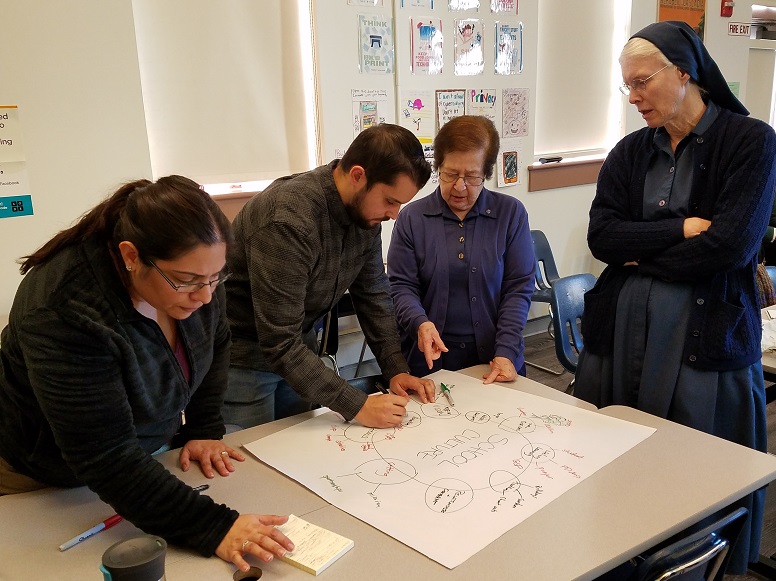
Small group processing is central to LCAP action planning.
SFNO Director of Evangelization and Catechesis Charles Legendre, AFSC is responsible for LCAP. He looks back on the Process’ evolution and sees how it and the schools have grown together in their understanding of its importance and bests uses.
“Over the years,” Legendre explains, “I have seen the District clarify the purpose and focus of the LCAP. The LCAP hones in on the core commitments informing the culture and identity of the school community – that’s its ‘lane.’ School communities now utilized the LCAP in many ways: to strengthen local formation, address mental health needs of students, develop more efficient communication pathways, clarify the Lasallian Catholic mission in the world today, and strengthen the connection to the District and larger Lasallian world.”
Another added feature to the Process has been SFNO’s collaboration with Springtide Research Institute, a social sciences-based organization that collects and interprets data on the spiritual lives and issues of young people ages 13-25. Since 2017, Springtide has helped to aggregate, analyze, and interpret LCAP data to enrich its usefulness to both the schools’ and SFNO’s faith formators. For Legendre, the impact of this partnership on LCAP has been a game-changer.
“With the recent dramatic changes in the religious landscape of young people,” he states, “the District recognized the need to better understand the spiritual needs of young people today. Springtide Research Institute provided an opportunity to explore the realities of the faith lives of our students using the best sociological tools available. The studies have provided our schools with data on students’ sense of belonging, their religious identity, the influences on their faith, and the degree to which they have found meaning and life satisfaction.”
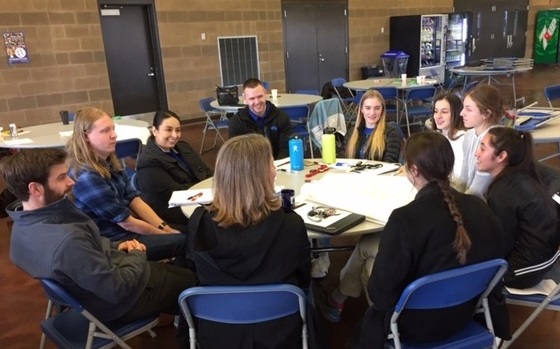
Students provide valuable input to school leadership.
In addition to its contributions to SFNO schools’ Lasallian identity and culture, LCAP also provides the District’s leadership with insights on the day-to-day realities of living the Lasallian mission for the schools’ students, faculties, staffs, and families.
“SFNO leadership relies on the LCAP to provide an accurate view of the vitality of the Lasallian mission in our schools,” says Legendre. “Certainly, the process identifies where school communities can grow (and in this way the process itself is an assessment). Further, LCAP can serve as a point of connection between administrations and Boards of Trustees and the Brothers in leadership who have the canonical responsibility to ensure the Lasallian Catholic identity of the school.”
From the beginning, the intent for the Lasallian Catholic Assessment Process has been that it not be experienced by schools as an outside imposition of a generic performance measurement, but as a compatible and empowering tool for refinement and enrichment from within. Moving into the future, it is clear that this aim has been met and that the LCAP now exists as an integral part of how SFNO’s schools immerse themselves in the work of realizing the Lasallian mission.
“LCAP,” Legendre reflects, “has become, in my view, a resounding affirmation that school communities and individuals in them want to meaningfully engage Lasallian spirituality. The constant message that I’m receiving is, ‘We want more and deeper Lasallian formation.’ Over the course of the years involved in the CLASP and LCAP, I noticed how this “assessment” has served as a powerful Lasallian formation process for a school community.”
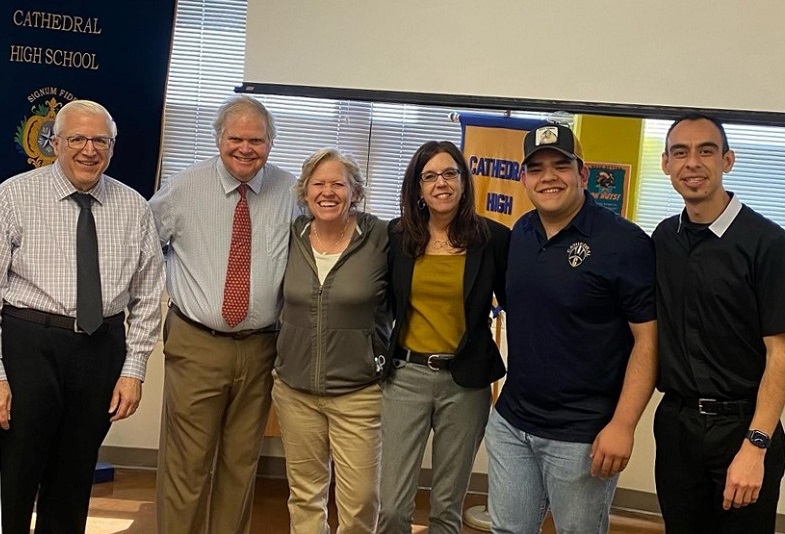
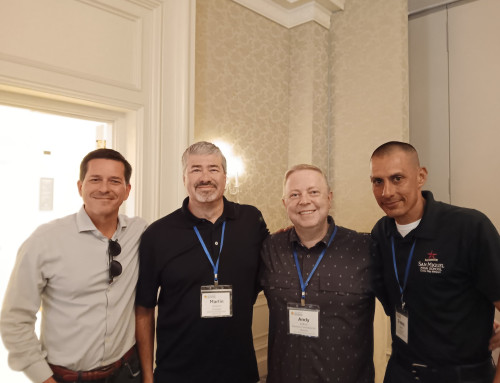
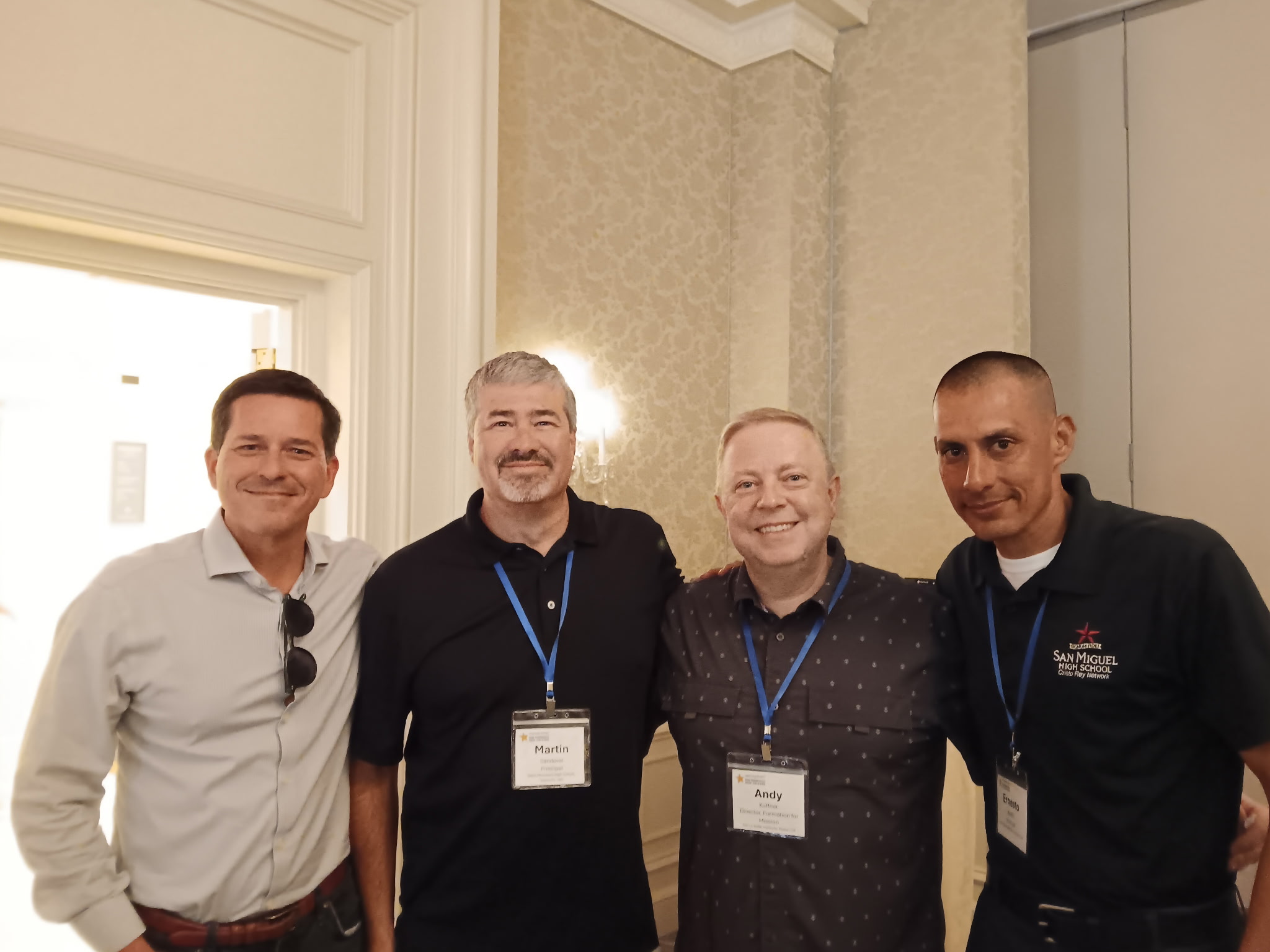
Onsite visiting teams offer an objective view to a school’s perception of itself and its Lasallian journey.
In the end, the ongoing challenge for any Lasallian school is how to take every opportunity to make itself into the best possible place for young persons to learn and grow as children of God. As for the LCAP’s potential to find even greater ways to serve SFNO schools and leadership, Legendre concludes, “The implications for leadership and for programming are profound. ‘More and deeper’ is a high bar, but it’s critical that we shoot for it.”